The Hidden Consequence of Missing Teeth: Preventing Jawbone Loss
Missing teeth is a dental condition that affects chewing ability and leads to changes in jawbone structure over time. When left untreated, the consequences of missing teeth may cause a gradual shift in facial structure as support from the jawbone decreases.
A survey by the American Association of Endodontists found that nearly 3 in 4 adults report that they are afraid of losing their natural teeth. Tooth loss isn't just an aesthetic issue; it's a functional problem that can impact everyday activities like eating and speaking.
Dental health maintenance plays an important role in maintaining jawbone health. Bone preservation techniques help prevent bone loss and support greater oral function.
Learn how you can support long-term dental health in San Jose, CA, below.
What Causes Jawbone Loss From Missing Teeth?
Jawbone loss from missing teeth is primarily caused by the lack of stimulation that tooth roots normally provide during chewing.
Without this pressure, the body begins to resorb bone in the area, leading to gradual weakening of the jaw structure.
The absence of teeth also disrupts alignment and balance within the bite. It can accelerate bone breakdown.
Over time, surrounding teeth may shift, placing uneven stress on the jaw and worsening loss. Reduced jawbone density can affect facial support and overall oral stability.
Early tooth replacement, along with restorative care, helps preserve structure and maintain long-term jaw health and function.
How Do Missing Teeth Affect Jawbone Health Over Time?
NIH MedLine Plus Magazine reports that more than 42% of all U.S. adults older than 30 have some form of gum disease. Almost 8% have severe periodontal disease, a leading cause of tooth loss.
Missing teeth reduce mechanical stimulation to the jawbone. An open space signals to the body to decrease bone maintenance activity.
This reduction leads to thinning of bone tissue and weaker structural support in affected areas. As the density declines, nearby teeth may experience altered force distribution. In turn, it increases stress on the surrounding bone.
Bite mechanics also shift by changing how pressure is absorbed during chewing. These combined effects contribute to reduced jawbone integrity and stability.
As a result, reduced jaw support limits long-term oral function and structural balance within the mouth. Progressive changes in bone quality can also complicate future restorative treatment options.
What Are the Early Signs of Jawbone Deterioration?
Early signs of jawbone deterioration often include subtle changes in bite pressure and chewing efficiency. Slight tooth mobility may develop as the underlying support begins to weaken.
Some individuals notice gum recession or increased sensitivity in areas of bone loss. Food is often more difficult to chew evenly due to shifting force patterns.
Spaces between teeth can widen as alignment becomes less stable. Dental appliances can feel less secure during use.
Because these changes can be gradual, routine dental exams are important for identifying bone loss before more severe structural complications develop.
How Do Missing Teeth Change Facial Structure?
Missing teeth can gradually reshape facial structure by removing support for soft tissues and muscles. Lips appear thinner as the underlying support diminishes.
Cheeks can become sunken due to reduced volume in the lower face. The space between the nose and chin shortens and creates a compressed profile.
Noticeable wrinkles around the mouth deepen as the underlying structural support declines. Jawline definition can soften and affect overall facial balance.
Changes in muscle positioning and tone can alter facial expressions. It can lead to visible differences in symmetry and proportion across the face.
Can Dental Implants Help Prevent Bone Loss?
Dental implants can help prevent bone loss by replacing the function of missing tooth roots. An implant provides some much-needed stimulation to encourage the jawbone to maintain its density.
Unlike removable options, implants integrate directly with the bone. They help preserve natural force distribution and structural integrity during chewing.
Having added support reduces the likelihood of surrounding bone shrinking due to inactivity. Implants also help stabilize nearby teeth, limiting unwanted movement that can strain the jaw.
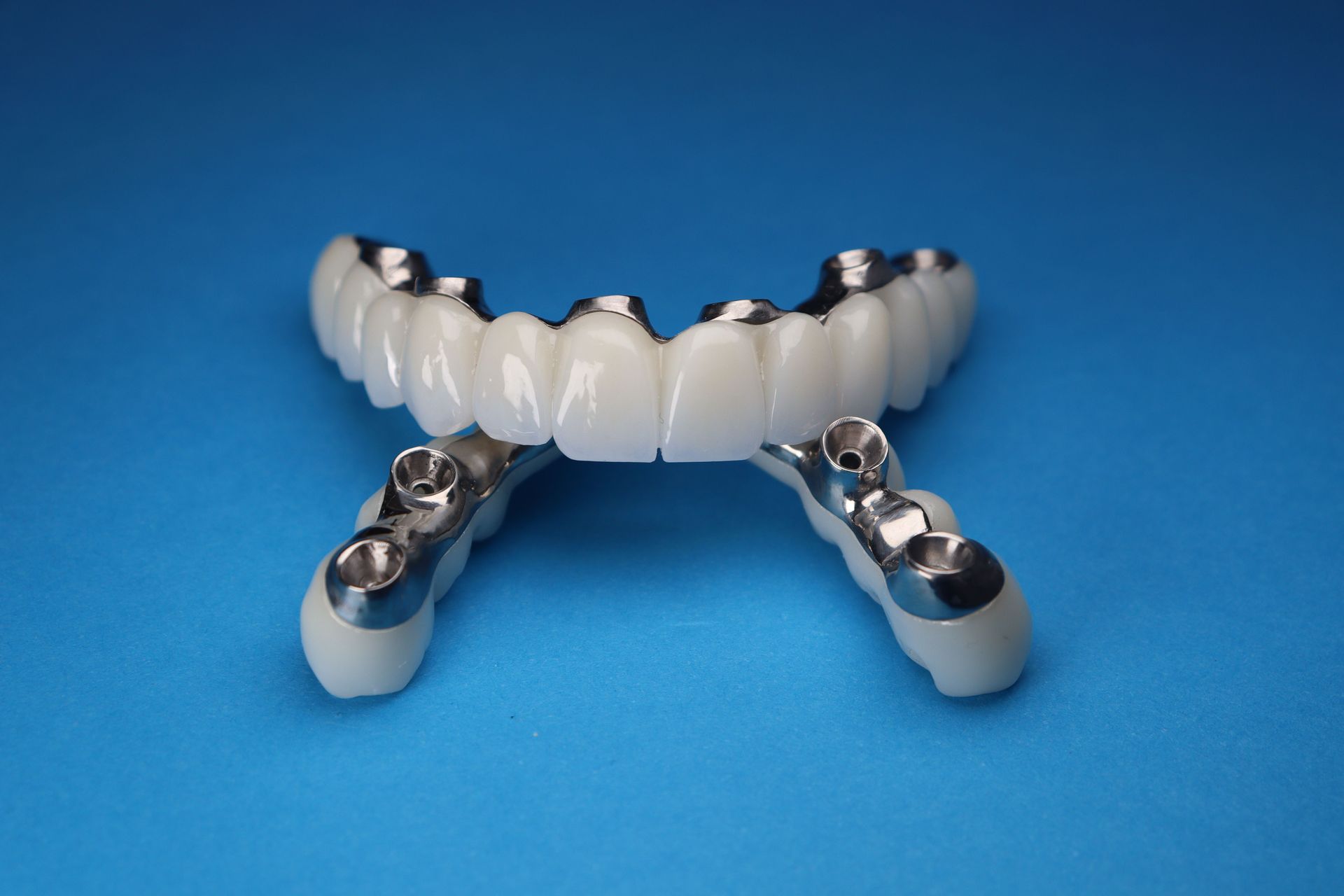
All-on-4 implants use precisely placed posts to support a full arch of teeth. Strategic placement offers stability when multiple teeth are missing for a full-mouth restoration.
Consistent stimulation from implants supports long-term bone preservation and maintains overall oral structure.
Do Dentures Maintain Jawbone Stability?
According to the American College of Prosthodontists (ACP), 120 million people in the U.S. are missing at least one tooth, and more than 36 million Americans do not have any teeth.
Dentures restore appearance and basic chewing ability but do not provide direct stimulation to the jawbone. Without this stimulation, bone density can continue to decline in areas beneath the appliance.
Changes in bone shape over time may affect how dentures fit, leading to reduced comfort and stability. Regular adjustments may be needed to maintain proper function.
While dentures support daily oral function, they do not actively preserve jawbone structure or prevent gradual bone loss in the long-term.
What Is Bone Grafting Used For in Jawbone Restoration?
Bone grafting is used in jawbone restoration to rebuild areas where bone volume has been lost due to missing teeth. The procedure places natural or synthetic material into weakened sections of the jaw.
In the process, this material encourages new bone growth. It offers added structure to help restore strength and prepare the area for future dental treatments.
Bone grafting can also improve stability for implants by increasing available support within the jaw. For certain issues, it helps correct uneven bone levels that affect alignment.
As healing progresses, the graft integrates with existing bone. Grafting creates a stronger foundation for long-term oral function and restorative care planning.
What Health Risks Come From Jawbone Loss?
Jawbone loss can reduce the foundation that supports facial muscles and oral tissues, affecting overall oral coordination. In some cases, reduced bone volume can complicate the placement and success rates of restorative dental treatments.
Ongoing loss of structural support may require more complex clinical planning to maintain oral health function. Changes in bone integrity can also increase sensitivity in the surrounding gum tissue. It can make routine care more difficult.
As structural changes progress, maintaining long-term treatment stability becomes more challenging for dental providers managing restorative outcomes.
Frequently Asked Questions
How Quickly Does Jawbone Loss Begin After a Tooth is Lost?
Jawbone loss can begin soon after a tooth is lost as the surrounding bone loses stimulation from chewing forces. Initial changes may start within weeks as the body begins to reduce bone maintenance activity in the affected area.
The rate of progression varies based on overall oral health and whether replacement options are used. Early dental evaluation helps identify changes before significant loss develops.
Without intervention, gradual bone reduction can continue as structural support diminishes.
Can Jawbone Loss Be Stopped Once It Starts?
Jawbone loss cannot always be fully reversed, but it may be possible to slow or stabilize its progression with the appropriate treatment plan.
Dental implants or other restorative options can help restore stimulation to the jawbone. Doing so supports continued bone maintenance. The use of bone grafting procedures aids in rebuilding areas of significant bone loss and improves structural support.
Prompt intervention is key. Receiving timely treatment helps preserve remaining bone and improves long-term oral stability and restorative success.
Does Bone Loss Make Getting Future Dental Implants More Difficult?
Yes. Bone loss can make future dental implant placement more challenging because there may be insufficient bone to support the implant securely.
Additional procedures, such as bone grafting, are usually required to rebuild adequate structure before implantation can begin. Reduced bone density also affects the implant stability and long-term integration with the jaw.
Careful evaluation is necessary to determine suitability. Successful treatment planning becomes more complex when significant bone deterioration has already occurred.
What Happens if Missing Teeth Go Untreated Long-Term?
When missing teeth go untreated long-term, the surrounding bone may continue to deteriorate due to a lack of stimulation. Loss of structure reduces the available support needed for restorative procedures.
Adjacent teeth may gradually drift into open spaces and create spacing irregularities. Gum tissue in affected areas may also lose firmness and complicate routine maintenance.
As structural changes progress, treatment planning becomes more limited. Additional corrective procedures may be necessary before restoration can proceed effectively.
What Daily Habits Support Bone Preservation After Tooth Loss?
Daily habits that support bone preservation after tooth loss focus on maintaining stimulation and overall oral cleanliness. Regular brushing and flossing help reduce harmful bacteria that can affect the surrounding gum and bone health.
Routine dental checkups allow early detection of structural changes and timely intervention. Chewing nutrient-rich foods can also help maintain jaw activity and support bone strength.
Avoid tobacco, as it can accelerate bone deterioration and negatively impact long-term oral stability and healing.
Get the Beautiful Smile You've Always Wanted at San Jose Dental Studio Today
Missing teeth can affect confidence when smiling or speaking. When structural changes are involved, jaw alignment may shift as teeth move and bone support decreases. Treatment options such as dental implants can help you restore function and overall appearance.
San Jose Dental Studio, located in San Jose, CA, is here for all your dentistry needs. We offer Cosmetic Dentistry, General Dentistry, Emergency Dentistry, and Dental Implants. Dr. Ravneet Dhillon and his team utilize state-of-the-art technology and compassionate care to make your dream smile a reality.
Don't delay! Get your dental implants from San Jose Dental Studio today!